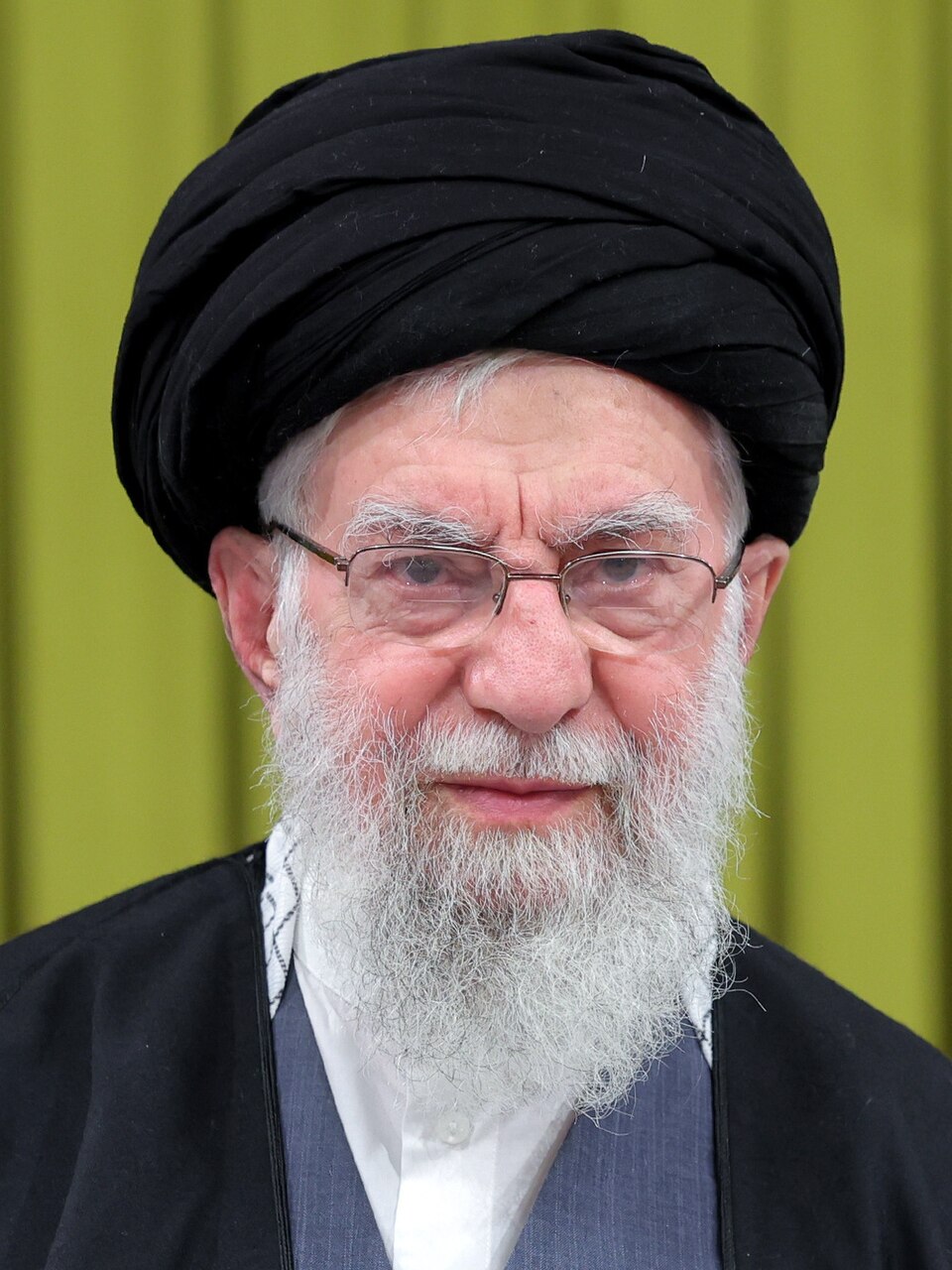
Khamenei's Death: Who Will Lead Iran After US-Israeli Strikes?
The sudden demise of Ayatollah Ali Khamenei, Iran's Supreme Leader, marks a seismic shift in the geopolitical landscape. Reports from Iranian state media, corroborated by US President Donald Trump, confirm that the 86-year-old leader was killed in a series of US-Israeli strikes targeting Tehran. This monumental event, which also claimed the lives of Khamenei's daughter, grandchild, daughter-in-law, and son-in-law, instantly plunges the Islamic Republic into an unprecedented succession crisis, raising urgent questions about its future leadership, regional stability, and global relations. The
end of Khamenei's three-decade rule signals not just the end of an era, but potentially the dawn of a highly volatile new chapter for a nation accustomed to his unwavering, if controversial, guidance.
The End of an Era: Khamenei's Reign and Demise
Ayatollah Ali Khamenei's rule as Supreme Leader spanned 34 years, making him one of the longest-serving leaders globally. Since ascending to the position in 1989 after the death of Ruhollah Khomeini, he consolidated immense power, acting as both head of state and commander-in-chief of the armed forces, including the elite Revolutionary Guards. Prior to this, he served as Iran's president from 1981, honing his political acumen within the nascent Islamic Republic. His image was ubiquitous, plastered on billboards and featured prominently in state media, ensuring that generations of young Iranians knew no other leader.
The circumstances of his death are particularly dramatic. The targeted US-Israeli strikes on his Tehran compound were initially assessed by Israeli officials to have severely injured him, with Iranian officials promising recordings to prove otherwise. However, by Sunday, Iranian state media confirmed his killing, with US President Donald Trump echoing the belief that Khamenei had died on Saturday. Israeli Prime Minister Benjamin Netanyahu, while not offering full details, noted "growing indications" of the Supreme Leader's death. This swift and decisive action follows a history of assassination attempts on Khamenei, most notably a 1981 bomb attack that permanently paralysed his right arm. That he ultimately fell victim to a coordinated international strike underscores the extreme tensions that defined his later years. For a deeper look into the implications of this monumental event, read
Ayatollah Khamenei Assassinated: Islamic Republic Faces New Era.
Navigating the Succession Crisis: Iran's Complex Power Structure
The death of a Supreme Leader in Iran triggers a highly formalised, yet inherently delicate, process of succession. The responsibility falls to the Assembly of Experts, a body of 88 predominantly conservative clerics elected by the public, tasked with choosing a new leader. Their decision requires careful deliberation to ensure the new Supreme Leader embodies the necessary religious credentials, political astuteness, and capacity to maintain the delicate balance of power within the Islamic Republic. This institution, however, operates under the shadow of intense internal factionalism and the powerful influence of the Revolutionary Guards (IRGC).
For years, speculation has swirled around potential successors. Among the most frequently mentioned was Khamenei's own son, Mojtaba. His potential ascent, however, raises questions about the "hereditary" nature of leadership in an Islamic Republic founded on revolutionary principles. Other candidates, often from within the Assembly of Experts or prominent clerical circles, would also vie for the position, each representing different ideological leanings and power bases. The challenge for the Assembly will be to select a leader who can command respect across the diverse spectrum of Iranian political and religious thought, unify competing factions, and crucially, maintain the foundational ideology of the Islamic Republic while facing unprecedented external pressure. The sudden vacuum left by this
iran leader assassination will test the resilience of Iran's unique political system like never before.
Regional Implications and Global Reactions
The immediate aftermath of Ayatollah Khamenei's death reverberated globally, sparking varied reactions. Exiled Crown Prince Reza Pahlavi, a prominent voice for regime change, celebrated Khamenei's demise on social media platform X/Twitter, labelling him the "bloodthirsty Zahhak of our time." Pahlavi declared that with Khamenei's death, "the Islamic Republic has in effect reached its end," calling upon the "courageous people of Iran" to remain vigilant and prepare for a "widespread and decisive presence in the streets." This sentiment reflects the hopes of many in the Iranian diaspora and opposition movements who envision a post-Islamic Republic Iran.
Regionally, the implications are profound. Khamenei was the architect of Iran's "Axis of Resistance," a network of proxy forces across the Middle East. His successor will face immense pressure to either maintain this strategy or recalibrate Iran's regional foreign policy. Any change could significantly impact conflicts in Yemen, Syria, Lebanon, and Iraq, as well as the ongoing tensions with Israel and Saudi Arabia. Globally, the US and its allies will be keenly watching the transition, particularly concerning Iran's nuclear program and its posture towards international negotiations. The assassination of Iran's leader has undoubtedly introduced a new, unpredictable variable into an already volatile region. The selection of a new leader could either escalate existing conflicts or, perhaps, open unexpected avenues for de-escalation, depending on their ideological leanings and pragmatic considerations.
The Path Forward: Challenges and Opportunities for Iran
The period immediately following Khamenei's death presents both immense challenges and potential opportunities for Iran. The primary challenge will be maintaining internal stability amidst potential unrest, both from disillusioned segments of the population and from powerful factions vying for influence. Economically, Iran continues to grapple with international sanctions and high inflation, issues that a new leader will inherit and be expected to address. Internationally, the country faces deep distrust from many global powers and strained relations with regional rivals.
However, opportunities may also arise. A new leader, particularly if they are younger or more reform-minded, could potentially usher in an era of internal political adjustments or even a re-evaluation of Iran's foreign policy. This could mean a more pragmatic approach to economic engagement, a relaxation of social restrictions, or a willingness to engage more constructively with the international community. The eyes of the world will be on the Assembly of Experts, the Revolutionary Guards, and ultimately, the Iranian people. The process of choosing a new Supreme Leader is complex, involving not just theological qualifications but also the ability to navigate the intricate web of clerical, military, and political interests that define the Islamic Republic. The coming months will reveal whether this leadership transition leads to further entrenchment of existing policies or paves the way for a transformative shift in Iran's trajectory.
The killing of Ayatollah Ali Khamenei in US-Israeli strikes marks a pivotal moment in modern Iranian history. As the nation grapples with the loss of its long-standing Supreme Leader and the tragic deaths of his family members, the critical question of who will lead Iran next looms large. The succession process, overseen by the Assembly of Experts, will be fiercely contested, with internal and external forces exerting immense pressure. The implications for Iran, the Middle East, and global geopolitics are profound and far-reaching, promising a period of intense scrutiny and potential upheaval.