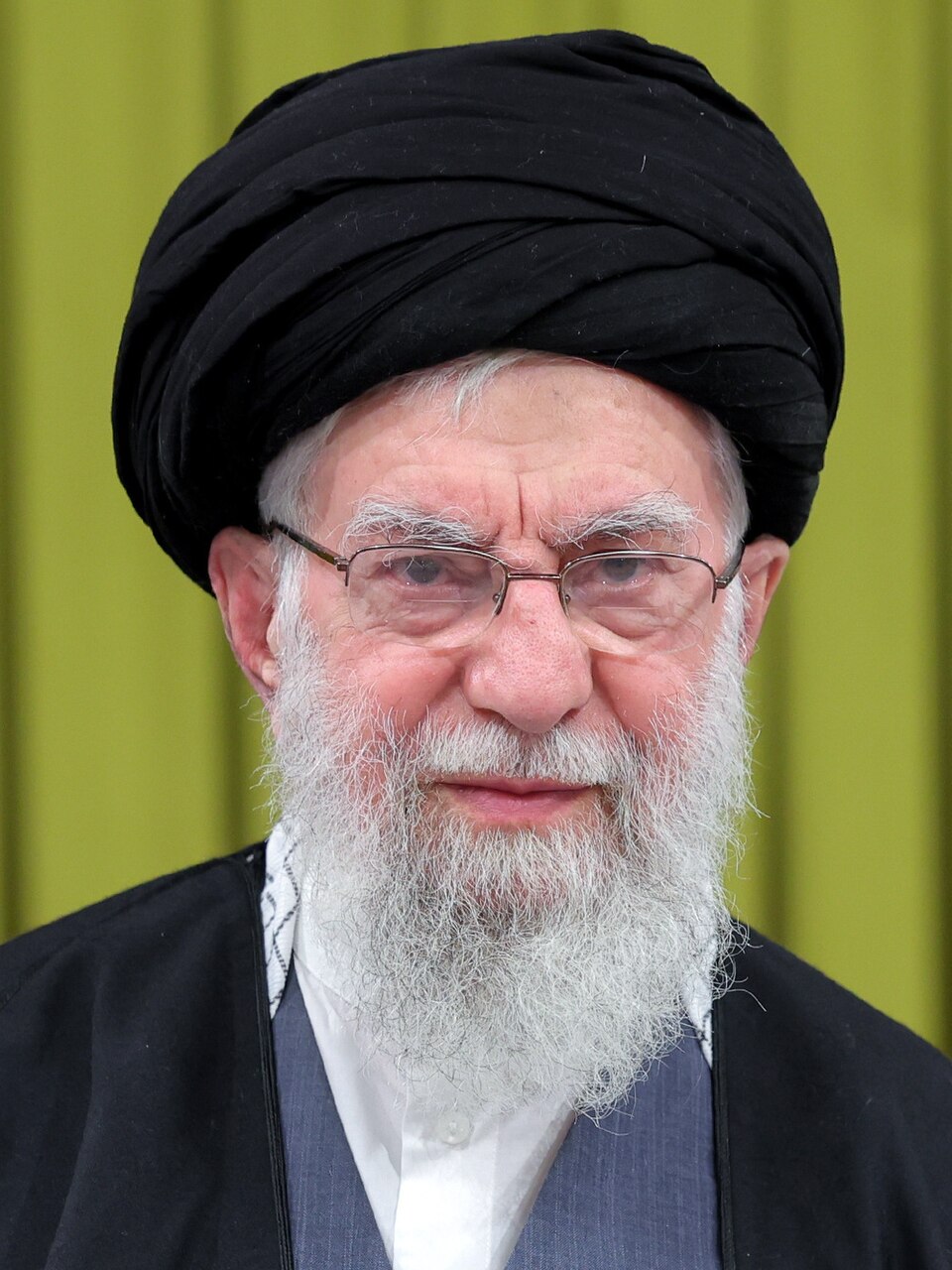
Iran's Supreme Leader Ayatollah Ali Khamenei Killed: End of a Three-Decade Rule
In a development poised to send seismic waves across the Middle East and beyond, Iranian state media announced on Sunday the death of Iran's Supreme Leader, Ayatollah Ali Khamenei. The 86-year-old leader, who had presided over the Islamic Republic for more than three decades, was reportedly killed in a series of US and Israeli strikes targeting his compound in Tehran. This monumental event marks the abrupt end of one of the longest and most influential tenures in modern Iranian history, igniting urgent questions about the future stability and direction of the nation.
The severity of the strikes was underscored by reports from Iranian state media, which also tragically confirmed the deaths of several of Khamenei's family members, including his daughter, grandchild, daughter-in-law, and son-in-law. The news was swiftly met with significant international attention, with US President Donald Trump confirming his belief in the supreme leader's death in a social media post, and Israeli Prime Minister Benjamin Netanyahu stating there were "growing indications" of the event in a televised address. The reported iran leader assassination has immediately become the focal point of global diplomatic and security discussions.
The End of an Era: Khamenei's Final Moments and International Reactions
The strikes that reportedly claimed the life of Ayatollah Ali Khamenei occurred on Saturday, with Iranian officials initially promising to release a recording from the supreme leader soon after the Israeli attacks targeted his Tehran compound. However, these promises were quickly overshadowed by the grim reports of his demise. The preliminary assessment among Israeli officials was that Khamenei was seriously injured in the strike, leading to the eventual confirmation of his death. The loss of such a central figure, especially under these circumstances, represents an unprecedented shift in the region's geopolitical landscape.
Reactions to the news have been swift and varied. From within Iran, state media's confirmation signaled a new and uncertain chapter. Internationally, the US and Israel's responses hinted at the complex dynamics behind the strikes. Perhaps one of the most poignant reactions came from the Iranian opposition. Exiled Crown Prince Reza Pahlavi, a vocal critic of the Islamic Republic, celebrated Khamenei's death in a post on X/Twitter. He described Khamenei as "the bloodthirsty Zahhak of our time, the killer of tens of thousands of Iran’s bravest sons," declaring that his demise meant the Islamic Republic had "in effect reached its end and will very soon be cast into the dustbin of history." Pahlavi urged the "honorable and courageous people of Iran" to remain vigilant, anticipating a "widespread and decisive presence in the streets" as the nation stands on the cusp of a potential new era. This sentiment highlights the deep divisions within Iranian society and the aspirations of those who have longed for systemic change.
A Three-Decade Reign: The Legacy of Ayatollah Ali Khamenei
Ayatollah Ali Khamenei's rule as Supreme Leader spanned from 1989, making his 34-year tenure one of the longest in the world. Prior to his ascension, he served as President under the first Supreme Leader, Ruhollah Khomeini, from 1981. This extensive period at the helm meant that generations of young Iranians have never known a time without him in ultimate charge. His image was ubiquitous, plastered on billboards and featured prominently on state television, which meticulously covered his every move, crafting an aura of unchallengeable authority.
As Supreme Leader, Khamenei held an all-powerful office, functioning as both head of state and commander-in-chief of the armed forces, including the formidable Islamic Revolutionary Guard Corps (IRGC). While not a dictator in the conventional sense, he masterfully positioned himself at the center of a complex web of competing power centers, granting him the ability to veto almost any matter of public policy and hand-pick candidates for key public offices. His influence permeated every aspect of Iranian life, from foreign policy to judicial appointments, and from military strategy to cultural directives.
Khamenei's life was also marked by personal challenges and threats. Born in Mashhad in April 1939, he moved to Qom in 1958, where he began attending lessons with Ruhollah Khomeini, who would later lead the Islamic Revolution of 1979. He had six children, and in recent years, one of them, Mojtaba, had been frequently mentioned as a potential successor, indicating the dynastic undercurrents within Iran's clerical establishment. The Supreme Leader had also been the target of several assassination attempts throughout his career. Most notably, on June 27, 1981, a bomb exploded during a speech at a mosque in Tehran, severely injuring him and permanently paralyzing his right arm. That he survived such an attack and went on to lead Iran for so long speaks to his resilience and political acumen, making the circumstances of the current iran leader assassination all the more impactful.
Immediate Aftermath and Future Implications for Iran
The death of Ayatollah Ali Khamenei creates an immediate and profound power vacuum within Iran. The Islamic Republic has only ever had two Supreme Leaders since its inception in 1979, making this transition a rare and critical moment. The immediate aftermath is likely to be characterized by intense internal maneuvering as various factions and institutions vie for influence. The Assembly of Experts, a body of 88 clerics, is constitutionally tasked with selecting the next Supreme Leader. However, the process is far from straightforward and can be heavily influenced by powerful figures within the establishment, particularly the Revolutionary Guard.
The geopolitical ramifications extend far beyond Iran's borders. Iran's regional adversaries, particularly Israel and Saudi Arabia, will be closely monitoring developments, as will global powers like the United States, Russia, and China. Iran's nuclear program, its proxy network across the Middle East, and its ongoing tensions with the West are all likely to be impacted by this leadership change. The stability of the entire region could hinge on how smoothly, or tumultuously, this transition unfolds. For a deeper dive into the potential successors and the complexities of this process, consider reading Khamenei's Death: Who Will Lead Iran After US-Israeli Strikes?
Navigating a Post-Khamenei Iran: What Lies Ahead?
The reported iran leader assassination fundamentally alters the political landscape of the Islamic Republic, ushering in an era of uncertainty and potential transformation. Here are key considerations for understanding the unfolding situation:
- Internal Power Struggles: Expect a period of intense internal jockeying for power. The balance between the conservative clerical establishment, the Revolutionary Guard, and other political factions will be severely tested. The role of figures like Mojtaba Khamenei, previously touted as a potential successor, will be scrutinized.
- Regional Stability: Iran's foreign policy and its network of proxies (Hezbollah, Houthis, various Iraqi militias) are intrinsically linked to the Supreme Leader's directives. Any shift in leadership could lead to either an escalation of regional tensions or, less likely but possible, a re-evaluation of Iran's regional strategy.
- Economic Impact: International markets, particularly oil, will react to the perceived stability or instability within Iran. Sanctions and the future of the Iranian economy will be central issues for any new leadership.
- The Public's Role: The call from figures like Reza Pahlavi for widespread public presence in the streets suggests the potential for popular unrest. How the new leadership responds to societal demands and internal dissent will be crucial.
- International Relations: The US, Israel, and European powers will be seeking to understand and potentially influence the direction of the new Iranian leadership. Diplomatic engagement, or further escalation, will depend heavily on the character and policies of Khamenei's successor.
This unprecedented event marks not just the end of a life, but potentially the end of an era for the Islamic Republic. The consequences of Ayatollah Ali Khamenei's reported assassination will reverberate for years, reshaping Iran's destiny and impacting global geopolitics in profound ways. To explore the broader implications for the nation, delve into Ayatollah Khamenei Assassinated: Islamic Republic Faces New Era.
In conclusion, the reported death of Iran's Supreme Leader Ayatollah Ali Khamenei marks a pivotal moment for Iran and the world. His three-decade rule, characterized by staunch defiance and profound influence, has come to an abrupt end. As Iran grapples with succession and the ramifications of this sudden shift, the international community watches with bated breath, recognizing that the future of a nation at the heart of global geopolitical tensions now hangs in a delicate balance.